PCD Diamond Saw Blades for Engineered Wood Panel Cutting
Writer: admin Time:2026-11-05 09:00:00
PCD Diamond Saw Blades for Engineered Wood Panel Cutting
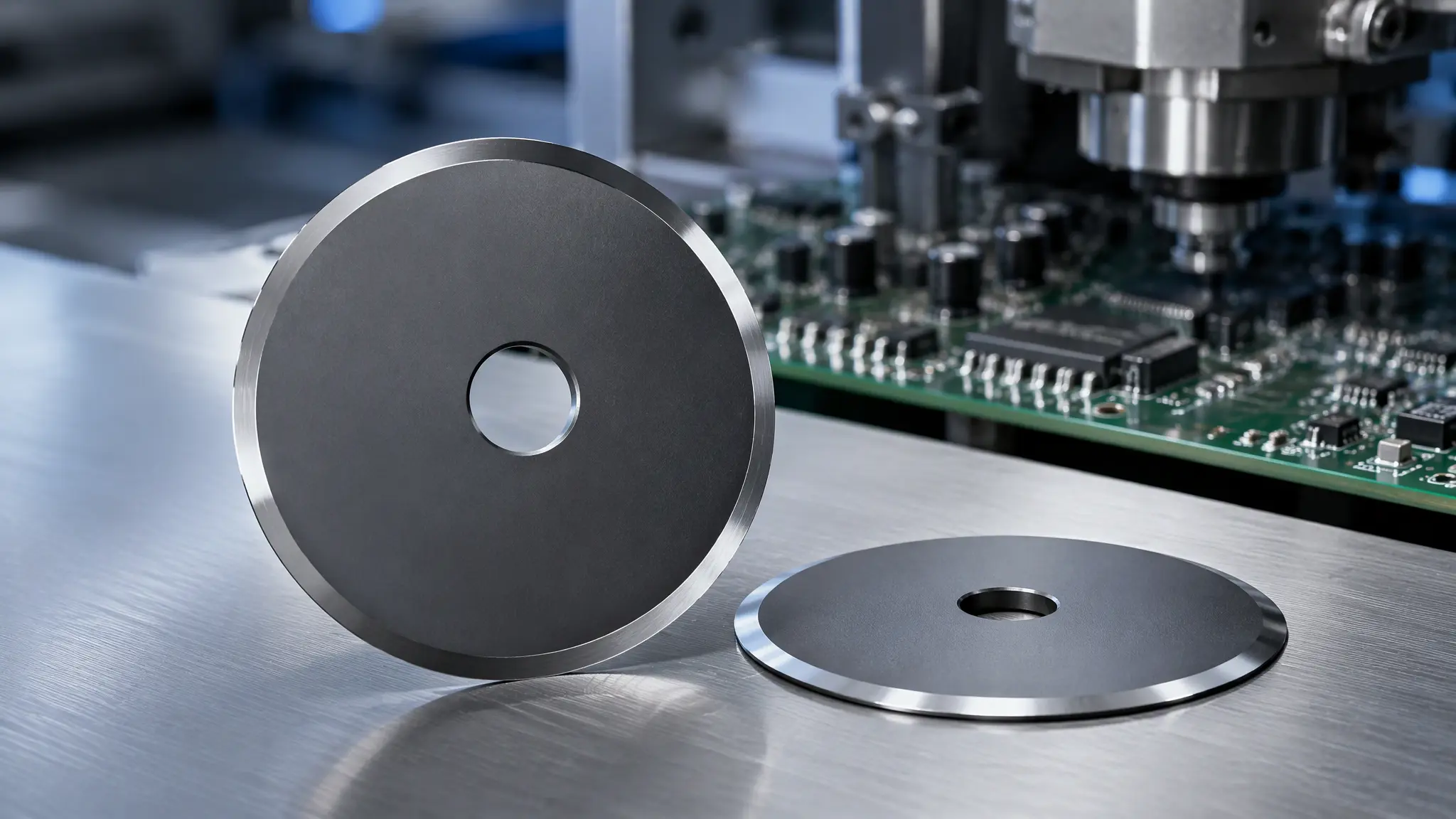
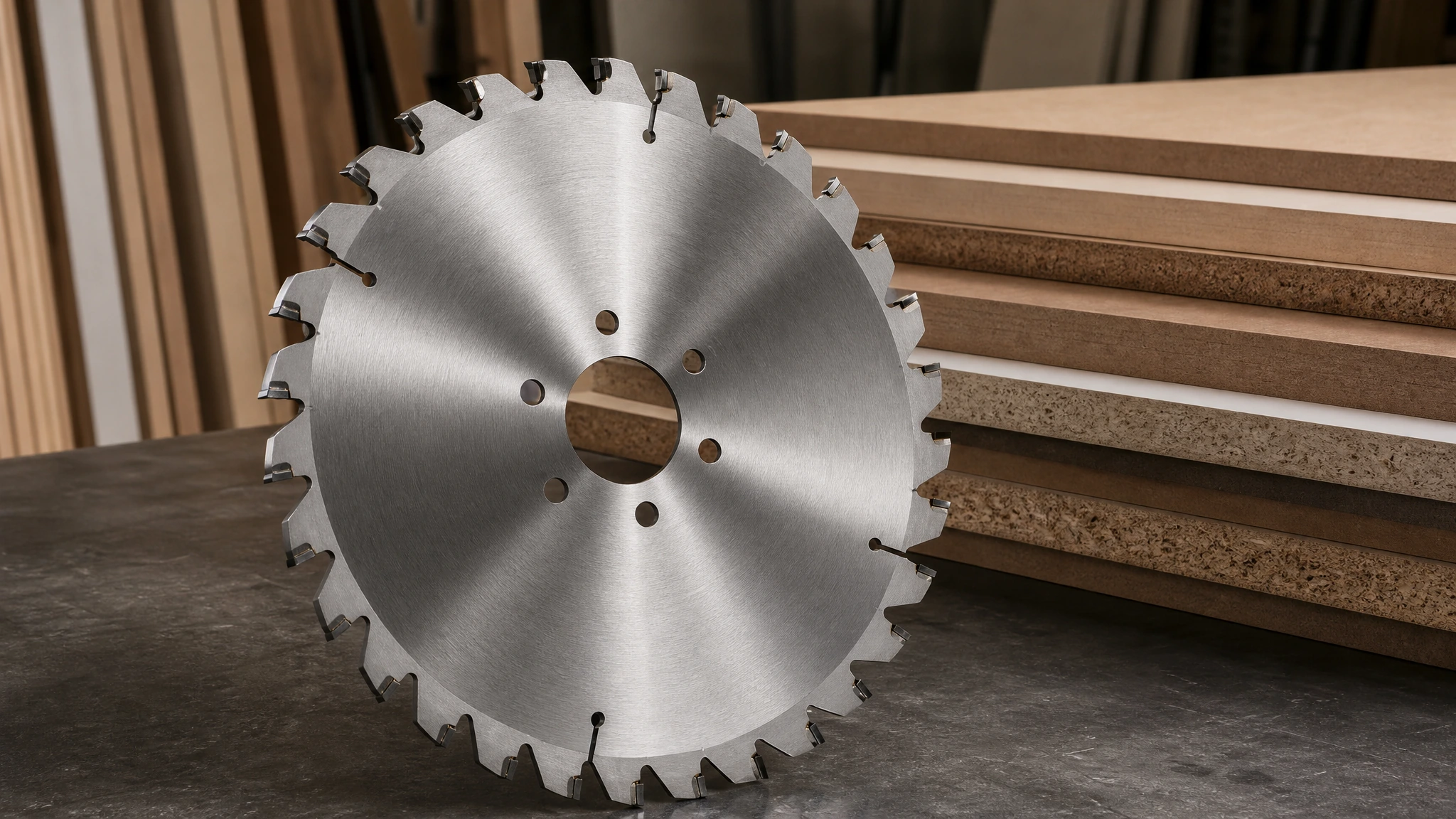
PCD diamond saw blades are considered for demanding cutting operations in engineered wood panels and selected mineral-based boards. They combine a steel blade body with polycrystalline diamond (PCD) cutting elements. For B2B buyers, the right choice depends on the board, machine, tooth geometry, dimensions, and production conditions—not on the word “diamond” alone.
What Are PCD Diamond Saw Blades?
PCD means polycrystalline diamond, a superhard cutting material. The supplied technical material describes diamond as substantially harder than carbide, with a comparison of approximately 50–150 times. This figure is source information for product evaluation rather than a universal performance guarantee.
A PCD saw blade normally uses an alloy-steel body and PCD composite diamond cutting heads. The source material also describes electric-discharge and electrochemical grinding processes for forming the cutting elements, together with dynamic-balance and heat-dissipation considerations. The practical result depends on the complete blade configuration and the operating conditions.
Applications for PCD Diamond Saw Blades
MDF, particleboard, and fiberboard
MDF, particleboard, medium-density fiberboard, and related panels can be abrasive and are widely used in furniture, cabinets, flooring, and component production. PCD blades can be evaluated for repeated cutting where edge quality, stable operation, and manageable maintenance are important. Buyers should identify whether the board is raw, coated, laminated, or otherwise finished.
Laminated, melamine, and decorative panels
Laminated panels, melamine boards, ecological boards, and compact decorative panels combine a core material with a surface layer. The blade selection should account for the required finish on both entry and exit sides, possible chipping, kerf, tooth geometry, and machine stability. A quotation should be based on the actual panel construction and cut direction.
Calcium silicate and cement-fiber boards
Calcium silicate board and cement-fiber board are mineral-based products with cutting behavior different from wood-based panels. The source material describes PCD diamond saw blades for calcium silicate board cutting and notes high hardness, wear resistance, heat resistance, and acid resistance as design considerations. These descriptions should be confirmed against the buyer’s board formulation and process.
Woodworking and high-density panel cutting
The supplied material describes PCD composite diamond saw blades for large-scale woodworking and high-speed finishing of particleboard and medium- to high-density panels. One example specification is φ300 × φ30 × 3.2 × 96T × 11°, with an alloy-steel body, welded PCD composite diamond heads, dynamic-balance design, and heat-dissipation design. This is an example only; final dimensions must match the machine and application.
Performance Information and Responsible Evaluation
The source material reports application observations of approximately 300–400 continuous working hours for certain PCD saw blade uses. It also describes repeated regrinding and a reported scrapping time of up to 4,000 hours per blade in a particular material context. These are source-described observations, not unconditional HAO CARBIDE guarantees. Actual life varies with board composition, contamination, feed rate, spindle condition, cutting depth, cooling, tooth geometry, and sharpening practice.
For procurement decisions, compare trial data from the intended line: cutting length, edge quality, chip level, power demand, sharpening interval, downtime, and total cost per panel or meter. A higher purchase price may be reasonable when the complete production result supports it, but that conclusion should be based on the buyer’s own records.
How to Select a PCD Saw Blade
Start with the material and the machine. Provide the board type, thickness, coating or laminate, required cut profile, machine model, spindle speed, feed rate, cutting depth, and whether the cut is rip, cross, or panel sizing. Also provide the existing blade dimensions and tooth count when available.
Next, review the blade body and cutting details. Confirm outside diameter, bore diameter, kerf, body thickness, tooth count, hook or rake angle, tooth geometry, PCD grade, joint quality, balance, and heat-dissipation requirements. The correct specification is the one that fits the equipment and produces the required result under the stated conditions.
Purchasing Advice for B2B Buyers
Describe the exact board material instead of using only “wood panel” or “diamond blade.”
Send blade diameter, bore, kerf, body thickness, tooth count, and angle requirements.
State machine information, spindle speed, feed rate, cutting depth, and production volume.
Explain the required edge finish and the acceptable level of chipping or surface damage.
Ask for a drawing or technical confirmation before approving a non-standard order.
Use a controlled trial to compare cutting quality, service interval, regrinding needs, and total operating cost.
Request clear guidance on inspection, sharpening, storage, and operating limits.
Custom PCD Saw Blade Support from HAO CARBIDE
HAO CARBIDE supports specification-based evaluation for PCD diamond saw blades used in engineered wood panels and selected board-cutting applications. Share your material, machine, blade dimensions, tooth requirements, and production target so the proposed configuration can be reviewed against the real cutting conditions.
Because performance depends on the full system, HAO CARBIDE recommends confirming drawings, application details, and trial criteria before production release. This approach helps buyers compare a blade on measurable results rather than on a general product label.
FAQ
Are PCD diamond saw blades suitable for MDF?
They can be evaluated for MDF and related fiberboard applications, especially where abrasive material and repeated production make edge durability important. The blade must still be matched to the MDF grade, thickness, machine, tooth geometry, and required finish.
What materials can PCD saw blades cut?
The supplied material identifies particleboard, MDF, high-density and medium-density fiberboard, laminated board, melamine board, ecological board, compact panels, wood flooring, and calcium silicate board as application areas. Confirm the exact material and process before selecting a specification.
Are PCD saw blades always better than carbide blades?
No. PCD and carbide should be compared for the actual material, production volume, edge requirement, machine, sharpening plan, and total cost. A trial and production data are more reliable than a general claim that one blade is always better.
What information is needed for a custom quotation?
Provide the material and thickness, coating or laminate, machine and spindle information, blade diameter and bore, kerf and body thickness, tooth count and angle, cutting direction, feed rate, required finish, and expected production volume. A drawing or photo of the current blade can also help clarify the request.
How long can a PCD diamond saw blade last?
Life depends on the complete cutting system. The source material reports approximately 300–400 hours of continuous use for certain described applications and mentions repeated regrinding in a particular context. These figures are source descriptions, not a universal service-life promise. Use a controlled trial to establish expected life for your line.
Request a PCD Saw Blade Review
Send HAO CARBIDE your board type, machine details, current blade dimensions, and cutting targets. Our team can review the application information and help define a PCD diamond saw blade specification for your purchasing evaluation. Contact HAO CARBIDE to discuss a drawing, quotation, or controlled trial plan.