Solid Carbide Rods with Coolant Holes: Tool Life in Deep Drilling
Writer: admin Time:2026-09-07 18:44:26
In modern CNC machining, deep-hole drilling (exceeding 3×D to 10×D) and high-feed milling represent some of the most aggressive environments for cutting tools. High thermal concentrations, rapid tool wear, and catastrophic chip jamming are persistent headaches for machine shop managers and tooling engineers.
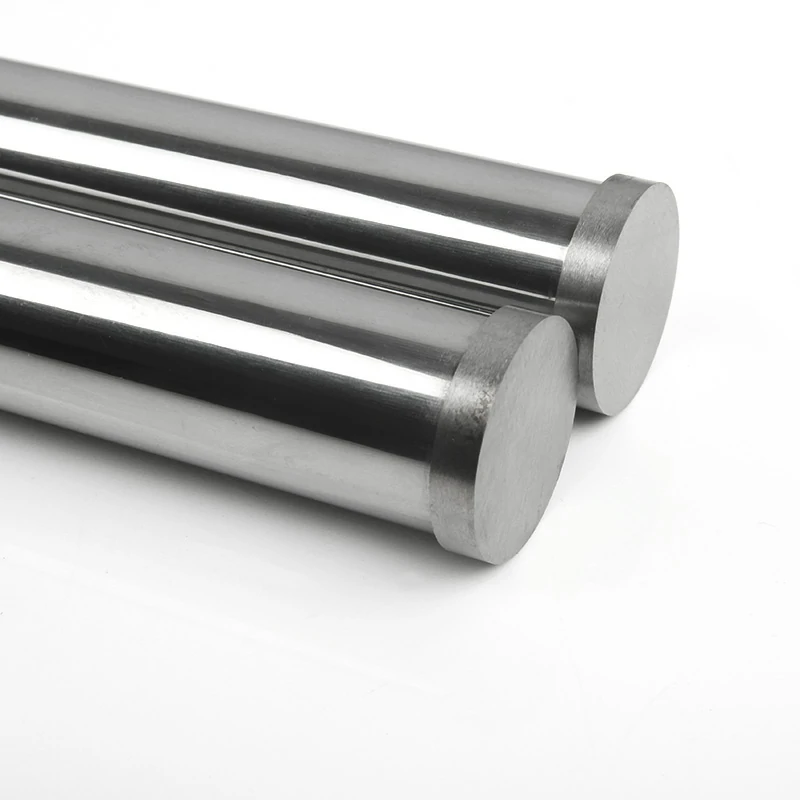
While selecting a high-grade solid carbide rod as the base tool material provides superior rigidity and wear resistance, relying solely on external flood coolant often fails in deep cavity operations. This is where the carbide rod with coolant hole has revolutionized modern cutting tool design.
As a premier manufacturer of tungsten carbide blanks based in Zhuzhou, HAO Carbide engineers precision solid and coolant-fed rods that redefine tool longevity. In this technical guide, we break down the physics of internal cooling, compare coolant rod configurations, and explain why internal channels are indispensable for demanding machining tasks.
The Core Challenge: Why External Cooling Fails in Deep Cavities
During metal cutting, temperatures at the primary shear zone frequently exceed 800°C to 1000°C. In standard shallow milling, external coolant nozzles can sufficiently dissipate heat. However, once a drill or end mill penetrates beyond three times its diameter (3×D), external cooling exhibits severe limitations:
The Vapor Barrier Effect: The rotating flutes and escaping hot chips create a high-pressure air barrier that deflects external fluid, preventing coolant from reaching the tool tip.
Thermal Shock & Micro-Cracking: Intermittent contact with external coolant creates fluctuating thermal cycles. For cemented carbide tools, these rapid temperature swings cause thermal fatigue, leading to comb cracks and edge chipping.
Chip Packing (Recutting): Without hydraulic assistance from behind the cutting zone, long, stringy chips become trapped in the flutes, rapidly escalating torque and breaking the drill.
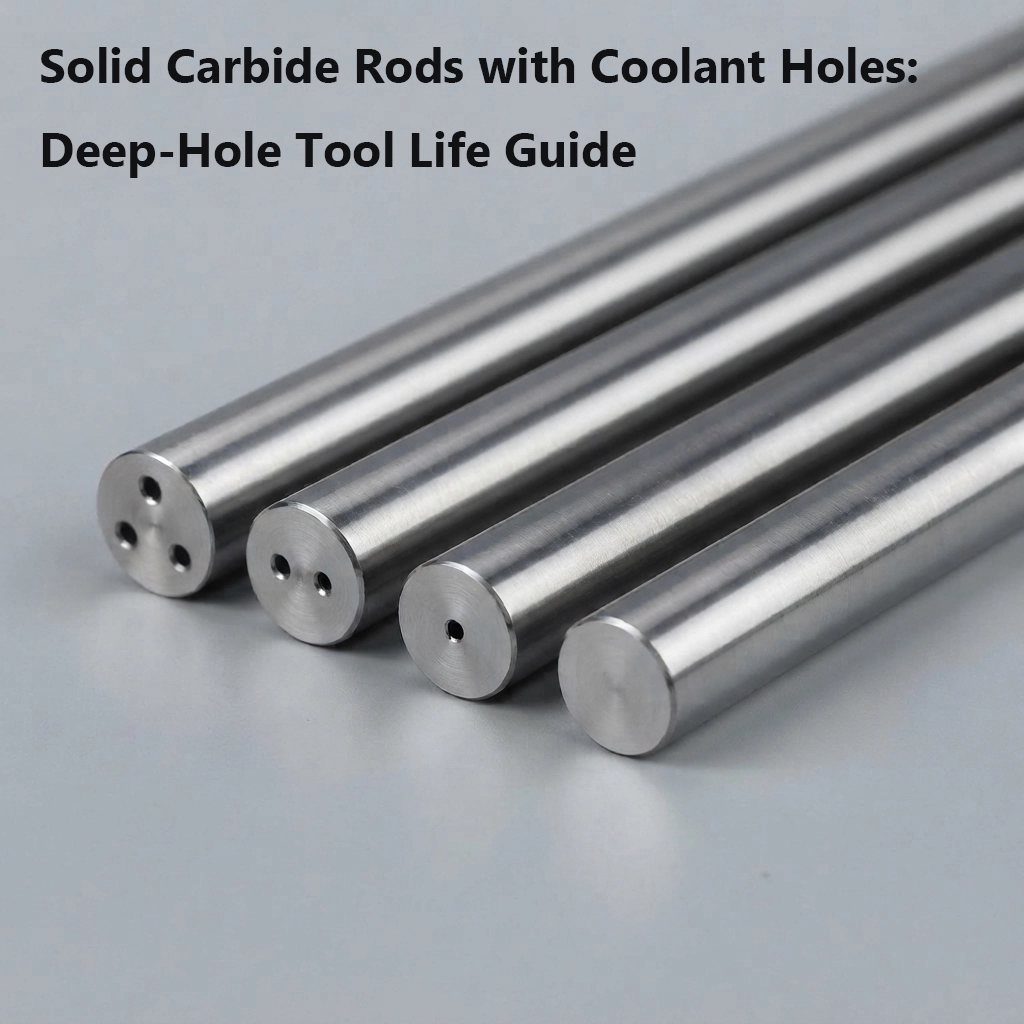
By utilizing a tungsten carbide rod with internal coolant channels, high-pressure coolant (typically 20 to 70 bar) is delivered directly through the tool body to the exact point of shear cut, flushing chips forward or up the flutes instantly.
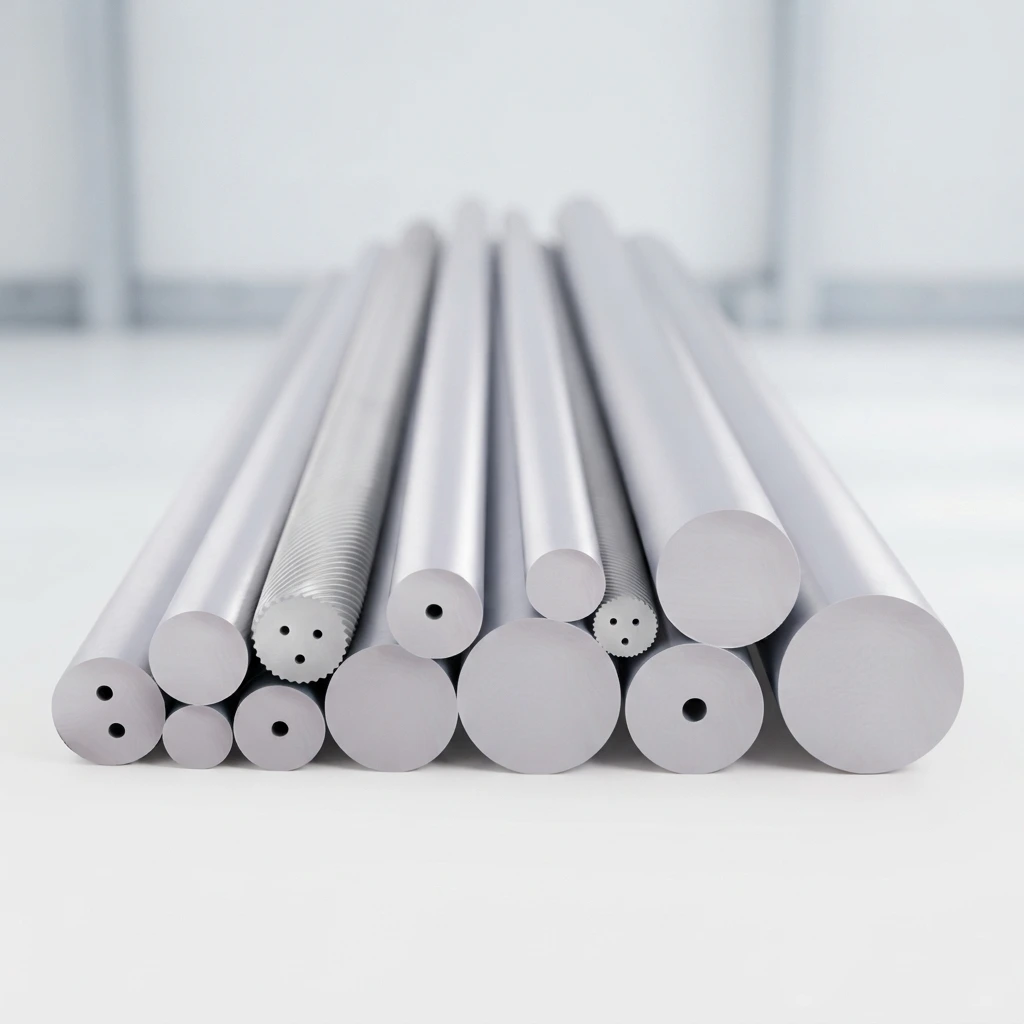
Solid Carbide Rod vs. Coolant-Fed Rod: Key Configurations
When toolmakers order carbide blanks from HAO Carbide, selecting the right channel geometry is critical to the final tool’s structural integrity.
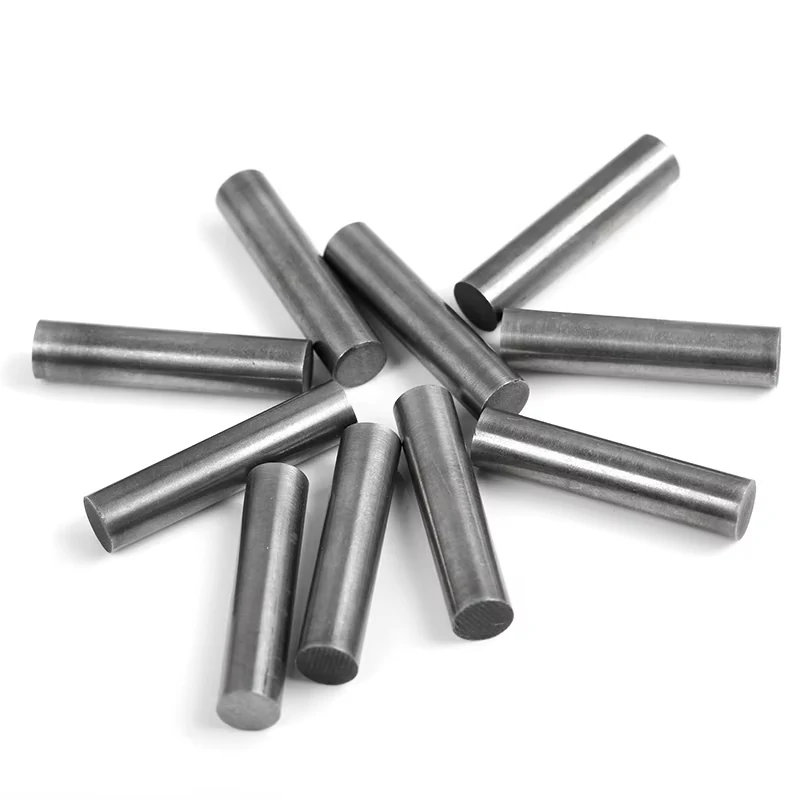
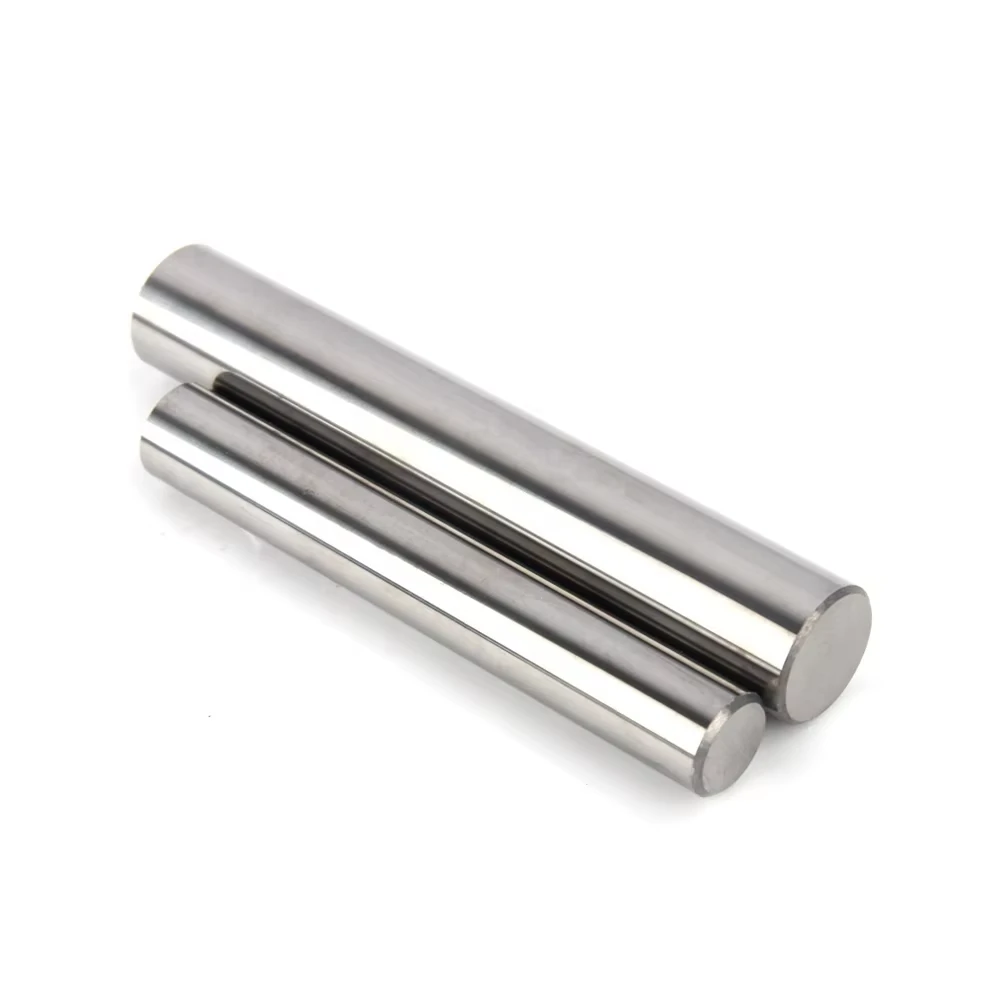
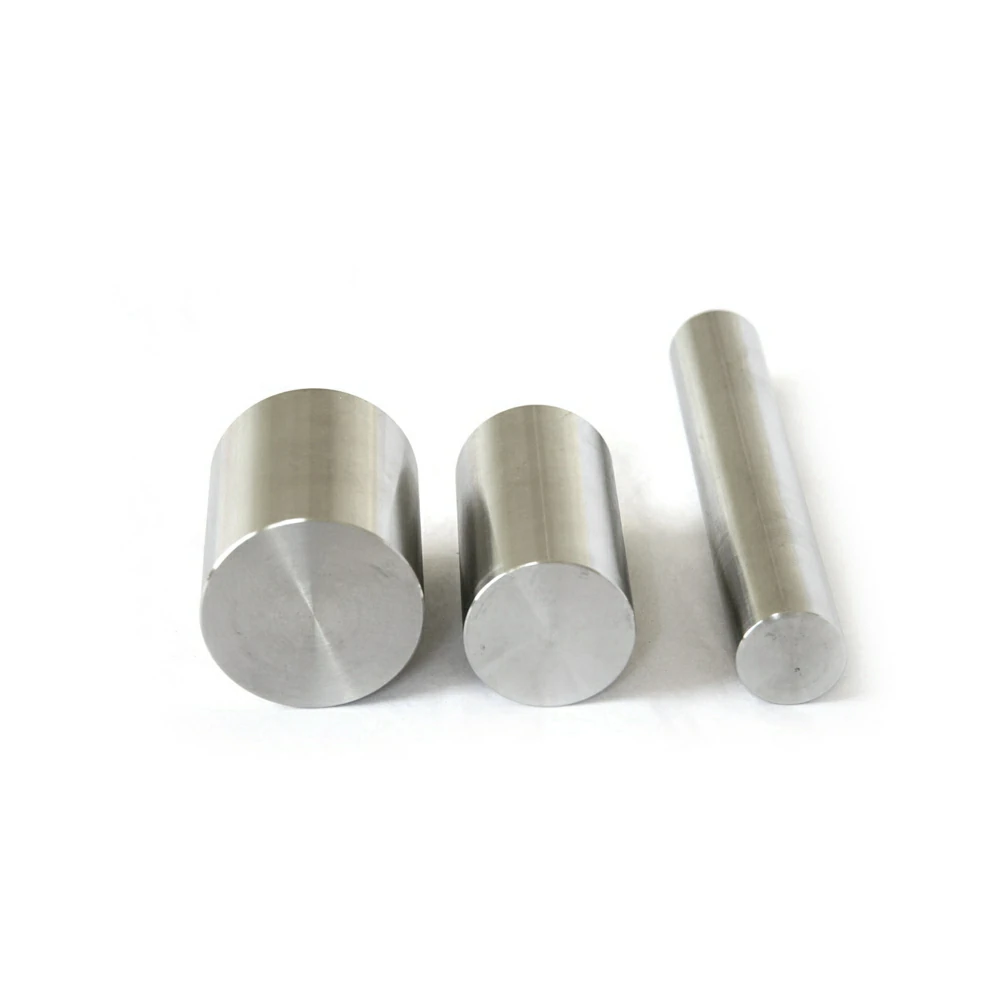
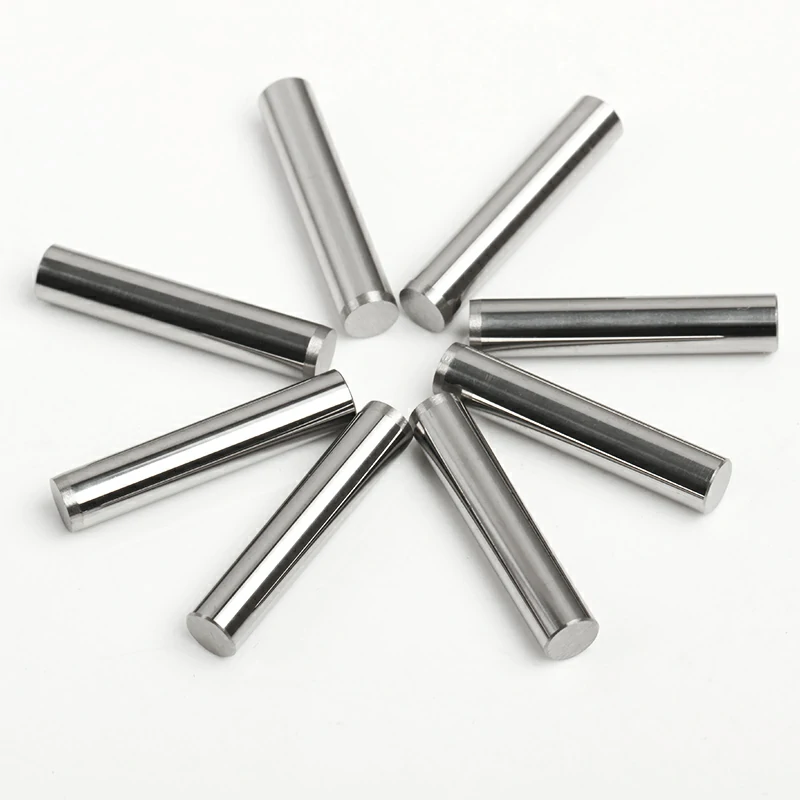
1. Solid Carbide Rods (Non-Coolant)
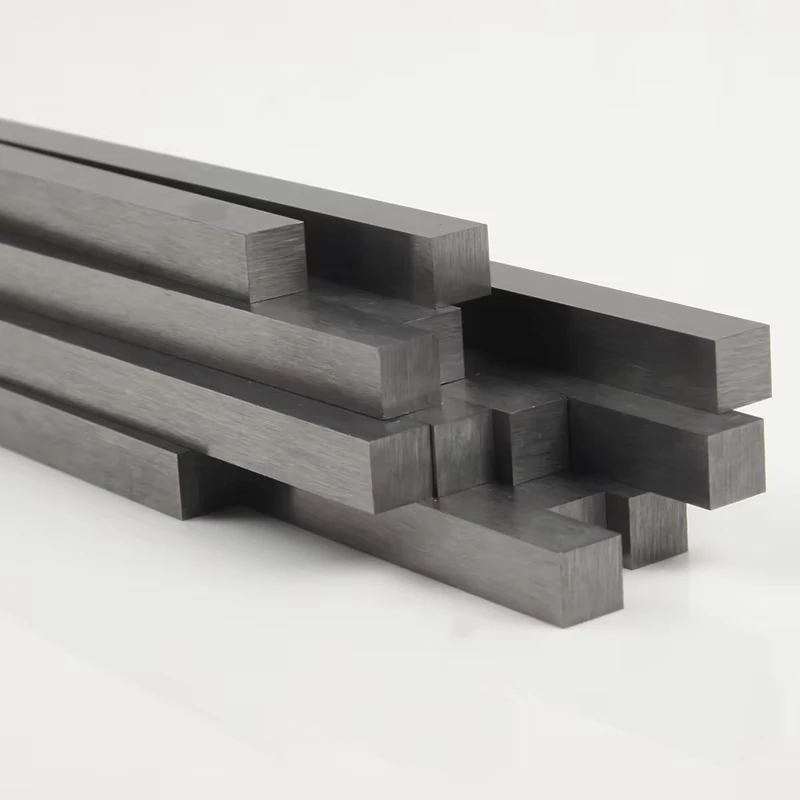
Configuration: 100% solid cross-section.
Best Applications: General milling, short-reach end mills (≤ 3×D), wood routing, engraving burrs, and wear punches.
Advantages: Maximum torsional stiffness and lowest raw material cost.
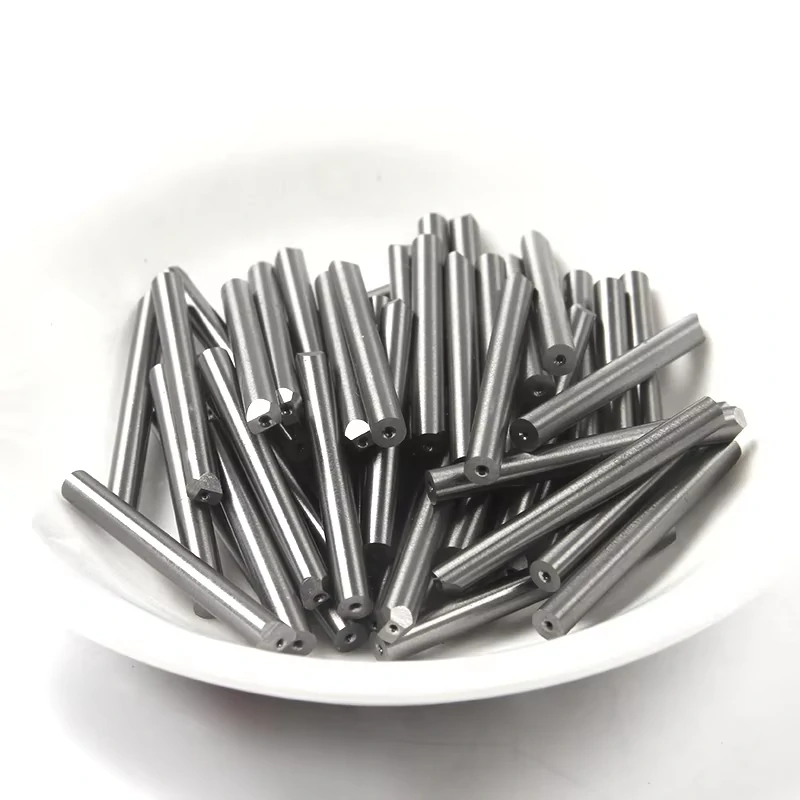
2. Single Central Coolant Hole
Configuration: A single uniform bore running straight through the center axis.
Best Applications: Reamers, gun drills, boring bars, and single-point threading tools.
Advantages: High coolant volume through a centralized port, ideal for axial flushing.
3. Two Parallel Straight Coolant Holes
Configuration: Symmetrical holes offset from the center axis.
Best Applications: Straight-fluted deep-hole drills and specialized indexable tool bodies.
Advantages: Leaves the tool core solid, maintaining axial strength while lubricating both cutting lips.
4. Two Helical (Twisted) Coolant Holes (30° or 40° Helix)
Configuration: Internal channels formed in a precise helical spiral matching the flute twist angle.
Best Applications: High-performance solid carbide twist drills (5×D to 30×D) and variable-helix end mills.
Advantages: Constant, unrestricted fluid exit precisely at the chisel edge and margins throughout tool resharpening.
3 Ways Coolant Holes Multiply Tool Longevity
Switching from a standard solid tool to an internally cooled tool yields substantial measurable benefits on the production floor:
| Machining Factor | Standard Solid Carbide Tool (Flood Coolant) | Carbide Tool with Internal Coolant Holes | Measurable Tool Life Gain |
|---|
| Cutting Zone Temp | Spikes above 850°C; prone to localized heat welding | Kept consistently below 450°C | +40% to +80% edge retention |
| Chip Evacuation | Relies solely on flute geometry; high risk of jamming | High-pressure hydraulic ejection forces chips out | Drastically reduces catastrophic breakage |
| Surface Finish | Risk of scratch marks from chip recutting | Clean, polished flutes; uniform chip curl | Ra value improved by 25–35% |
| Cutting Parameters | Limited Vc (cutting speed) and feed rates | Allows 30%–50% higher spindle speed & feeds | Significantly shorter cycle times |
Material Grade Matters: Ultra-Fine Sub-Micron Carbide
A coolant hole introduces internal voids into a tool body. If the cemented carbide rod is pressed with poor-quality powder or contains micro-porosity, the tool will snap under high torsional loads.
At HAO Carbide, all our solid and coolant rods are manufactured from 100% virgin sub-micron tungsten carbide powder processed via low-pressure HIP (Hot Isostatic Pressing) sintering.
Precision Manufacturing Standards: What to Check in Coolant Rods
When auditing your carbide blanks suppliers, visual inspection is not enough. High-speed CNC grinding machines demand strict physical tolerances:
Outer Diameter Tolerance: HAO Carbide provides unground rods with consistent grinding allowances (+0.3 / +0.8 mm) or precision ground rods finished to h6 / h5 tolerances.
Pitch Uniformity (for Helical Rods): The helix angle must remain mathematically consistent throughout the entire rod length (310 mm or 330 mm standard) to prevent breakout during CNC flute grinding.
Concentricity & Runout: Coolant hole concentricity must be strictly within ≤ 0.05 mm, ensuring that fluting operations do not cut into the coolant passage.
Upgrade Your Toolmaking with HAO Carbide
Whether you are manufacturing standard 4-flute end mills or specialized 20×D deep-hole coolant drills, the quality of your raw rod blank dictates the performance of your finished cutting tool.
Why partner with HAO Carbide?
Extensive Stock Availability: Standard diameters from Ø3.0 mm up to Ø32.0 mm (Solid, Straight Two-Hole, and 30°/40° Helical) ready for global shipment.
Custom Engineering: Custom coolant hole diameters, non-standard pitch angles, and pre-chamfered blanks fabricated to your CAD drawings.
Zhuzhou Factory Direct Pricing: Eliminate trading intermediaries and access factory-backed consistency with full metallurgical test reports (Density, Hardness, Magnetic Saturation, TRS).
Need Reliable Carbide Blanks for Your Next Production Run?
Explore our full technical catalog at www.hao-carbides.com or submit your specification sheet to our engineering team today for an express quotation within 24 hours.